Contribution to a Circular Society

Policy on Containers and Packaging
We are working to collect empty containers efficiently and use sustainable materials to establish recycling-oriented society.
Priority goals to help achieve a recycling-oriented society
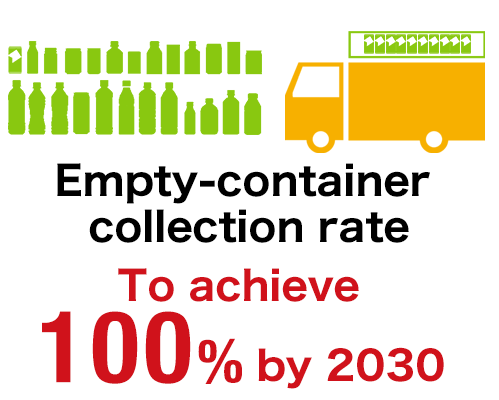
Empty-container collection rate: collection implemented in collaboration with other companies is included
Calculation basis: weight of the relevant containers collected / weight of the relevant containers shipped
Relevant containers: plastic bottles, glass bottles, aluminum cans and steel cans
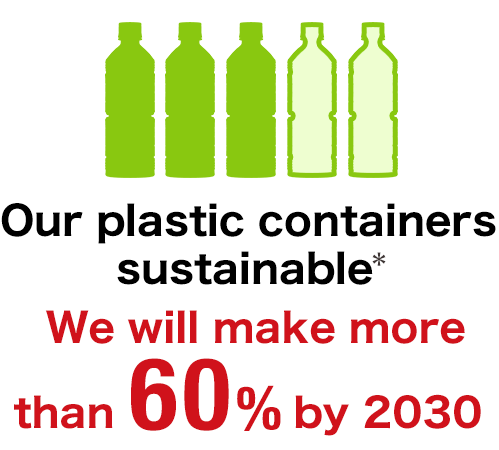
- * plant-based or recycling based materials

Reduction and Reuse of Discarded Fruit Pulp
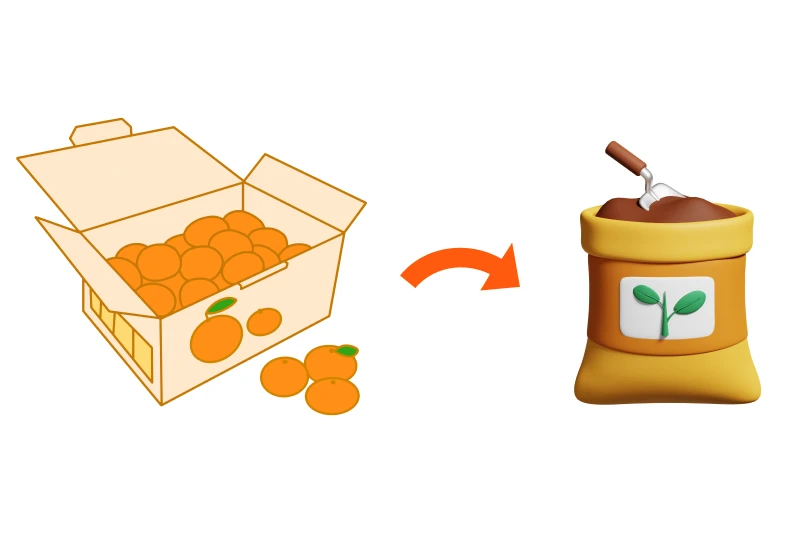
Until 2017, most of the discarded fruit pulp generated was outsourced for disposal. However, since 2022, we have significantly reduced the annual volume of discarded pulp and now process approximately 90% of it in-house. The pulp is dehydrated and crushed, then discharged as a dewatered cake mixed with sludge, which is subsequently reused as fertilizer.
Reuse of Canned Syrup as Animal Feed
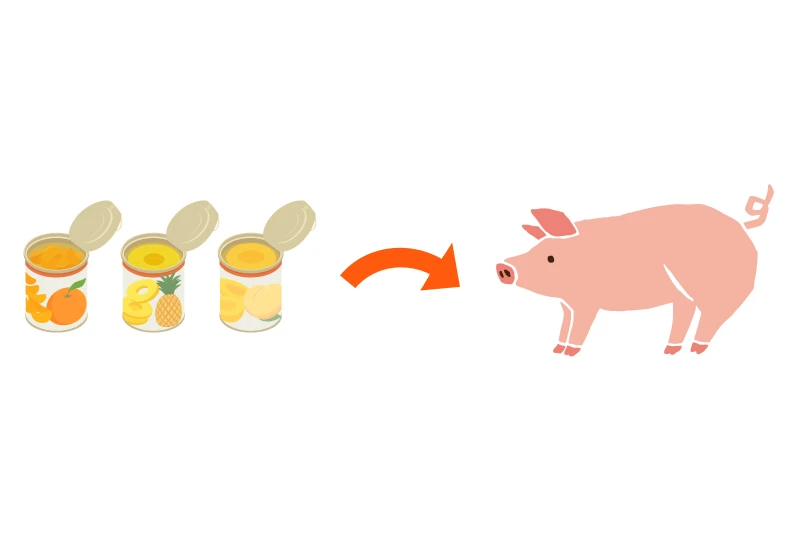
Since the establishment of the Konagai Plant, we have been reusing discarded syrup by mixing it into liquid feed for pigs. Approximately 60% of the syrup generated annually is reused as feed, while the remaining 40% is treated at our in-house wastewater treatment facility or transferred to external contractors. Pigs fed with syrup-containing liquid feed have received high praise for their tender meat and lack of odor.
Reuse of Canned Syrup as Animal Feed
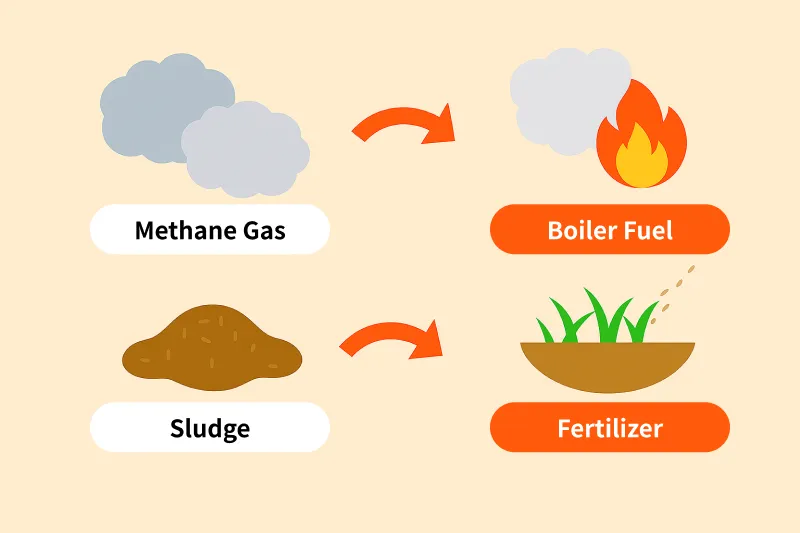
During the wastewater treatment process, methane gas and sludge are generated in addition to water. The methane gas is reused as boiler fuel within the plant, while the sludge is recycled as fertilizer. These efforts contribute to the realization of an environmentally harmonious factory that minimizes impact on the surrounding environment. We remain committed to reducing the environmental burden associated with product manufacturing and to preserving sustainable water resources and the rich natural environment that nurtures them.

Recycling of Glass Bottles
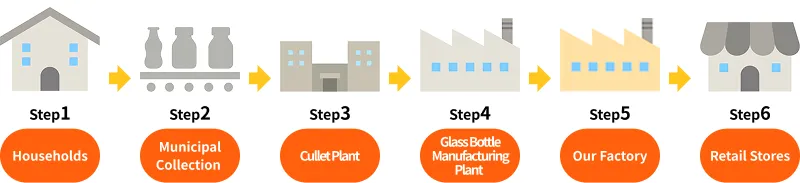
Glass bottles (made from soda-lime glass) are composed of natural materials similar to the Earth's crust. They are environmentally friendly and can be recycled repeatedly without releasing pollutants that harm the environment.